
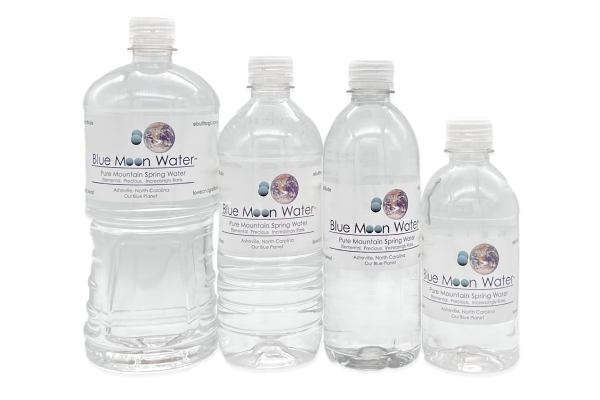
Blue Moon Bottled Water

-
 Contaminants:
 -
Above Guidelines:
-
Microplastics:
-
PFAS:
-
Flouride:
-
pH:
Please Note
All results & information have not been verified. All data is provided by the applicable company and may be estimated based on scientific data. Ratings and scoring are subject to drastically change based on new data / research.
Contaminants Found (6)

Bromide
A naturally occurring ion found in seawater and some groundwater.
While not harmful on its own, it can form toxic byproducts, like bromate, during water disinfection processes.
Gross Alpha
Measures of radioactivity in water, often from natural sources or nuclear activities.
Prolonged exposure to radioactive contaminants may increase the risk of cancer and damage internal organs, especially the bones.
Gross Beta
Measures of radioactivity in water, often from natural sources or nuclear activities.
Prolonged exposure to radioactive contaminants may increase the risk of cancer and damage internal organs, especially the bones.
Perchlorate
A chemical used in explosives and rocket fuel, often found in water near military or industrial sites.
Can disrupt thyroid function by inhibiting iodine uptake, potentially leading to developmental delays in children and hormonal imbalances.
Nitrate
Commonly found in water due to agricultural runoff, sewage, and industrial waste.
Can cause methemoglobinemia, or "blue baby syndrome," in infants and may increase the risk of cancer and thyroid problems with prolonged exposure.
Radon
A radioactive gas that can dissolve into groundwater from natural sources.
Prolonged exposure increases the risk of lung cancer, especially in poorly ventilated areas.
Water Sourcing and Treatment
Bottled water derived from an underground formation from which water flows naturally to the surface of the earth
Other Ingredients Found (7)
Chloride
Total: 1.4 mg/LA naturally occurring ion found in salts, sometimes entering water from road salt, sewage, or industrial processes.
Copper
Total: 0.003 mg/LA metal found in water from plumbing systems and industrial waste.
Magnesium
Total: 0.26 mg/LA mineral essential for bodily functions, found naturally in water.
Radium226
Total: 0.162A naturally occurring radioactive element.
Radium228
Total: 0.679Another isotope of radium found in natural deposits.
Sodium
Total: 2 mg/LZinc
Total: 0.007 mg/LA chemical used in PVC production.