
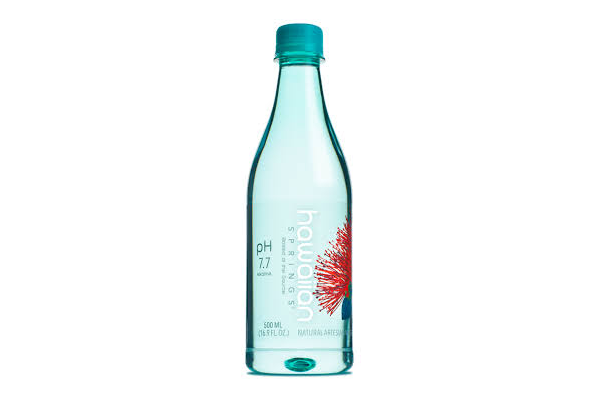
Hawaiian Springs Water

-
 Contaminants:
 -
Above Guidelines:
-
Microplastics:
-
PFAS:
-
Flouride:
-
pH:
Please Note
All results & information have not been verified. All data is provided by the applicable company and may be estimated based on scientific data. Ratings and scoring are subject to drastically change based on new data / research.
Contaminants Found (3)

Bromate
A disinfection byproduct formed when ozone used in water treatment reacts with bromide.
Associated with an increased risk of cancer, and can cause kidney damage when ingested in high levels over long periods.
Nitrate
Commonly found in water due to agricultural runoff, sewage, and industrial waste.
Can cause methemoglobinemia, or "blue baby syndrome," in infants and may increase the risk of cancer and thyroid problems with prolonged exposure.
Sulfate
A naturally occurring mineral found in water from soil leaching, rocks, and industrial processes.
High sulfate levels can cause gastrointestinal discomfort, including diarrhea, especially in infants and sensitive populations.
Water Sourcing and Treatment
Hawaiian Springs natural artesian water comes from deep earth aquifers within ancient lava rock on the Big Island of Hawaii
Other Ingredients Found (7)
Calcium
Total: 6.4 mg/LA naturally occurring mineral in water that contributes to hardness.
Chloride
Total: 4.2 mg/LA naturally occurring ion found in salts, sometimes entering water from road salt, sewage, or industrial processes.
Magnesium
Total: 3.4 mg/LA mineral essential for bodily functions, found naturally in water.
Sodium
Total: 6.7 mg/LSilica
Total: 43.6 mg/LA mineral that enters water from natural sources or industrial discharge.
Potassium
Total: 2.3 mg/LA common metal in water, often from natural deposits or corroded pipes.
Totalhardnessascaco3
Total: 27 mg/LFound in water mainly from agricultural runoff, sewage, and fertilizer use. Often measured in the form of nitrate or ammonia in water.